Global News-Headlines & Alerts
- 4.3
- Rating
- 100.00K
- Installs
- Free
- Price

 Analysis by App-foxy
Global News-Headlines & Alerts is the kind of news app I reach for when I want a quick sense of what is happening without opening several separate sources. Its focus is broad: international headlines alongside news connected to my city, all within a single mobile reading experience. That combination makes it more useful than a purely global feed when local context matters, but it also means the quality of the experience depends heavily on having a working connection at the moment I need it.
Developed by EASE Group, this free News & Magazines app is aimed at a general audience and carries an Everyone age rating. It has reached over 100 thousand installs and holds a 4.4 average from around 1.3 thousand ratings, which suggests that many users find its straightforward approach worthwhile. I tested it with a practical mindset: checking headlines during short breaks, switching between wider events and nearby stories, and seeing how well the app fits real phone habits rather than treating it like a full newspaper replacement.
How Global News-Headlines & Alerts feels when the connection is doing the work
I find this app most useful when I can give it a steady connection and a clear purpose: a quick check for what is happening beyond my neighborhood, followed by a look at what might affect my day closer to home. In this section, I focus on how that connected routine can fit around real interruptions, rather than treating a feed as something to monitor constantly. That distinction matters when deciding what to do with the headlines once I have them.
You May Also Like

 Blood Strike: 2.5 Anniversary
Blood Strike’s Loadouts Turn Every Drop Into a Tactical Gamble
A close look at Blood Strike’s custom loadouts: how fast access to signature weapons reshapes its battle royale rhythm, rewards preparation, and narrows the gap between fights.

 Pandora - Music & Podcasts
Pandora’s Music Is Easy to Start, but Harder to Recover
Pandora’s strength is its low-effort path from a seed to a station. Its weak spot is how much confidence it asks you to place in connection, setup, and quiet recovery.

 8 Ball Pool
 Is Built on Rivalries, Rematches, and Routine
A close look at the rivalries, rematches, shared routines, and unanswered safety questions that turn a quick pool match into a persistent mobile community.

 Samsung Music
’s Quiet Strength Is Playing What You Already Own
Its reach comes less from spectacle than from dependable access to a personal library. That simplicity is both the app’s strongest retention engine and its ceiling.

 AccuWeather: Weather Radar
AccuWeather Review: A Quick, Clear Forecast for Everyday Decisions
For everyday plans, the best forecast is the one you can understand quickly. AccuWeather makes rain timing, radar, and local conditions easy to act on, with a few trade-offs.

 Hill Climb Racing
Why Hill Climb Racing Still Turns Crashes Into One More Run
A tiny car, a bumpy hill and one more upgrade: Hill Climb Racing keeps resurfacing because its simple chaos makes every near-miss feel personal.
More From Our News Desk
View All News


A useful starting point for global and local awareness
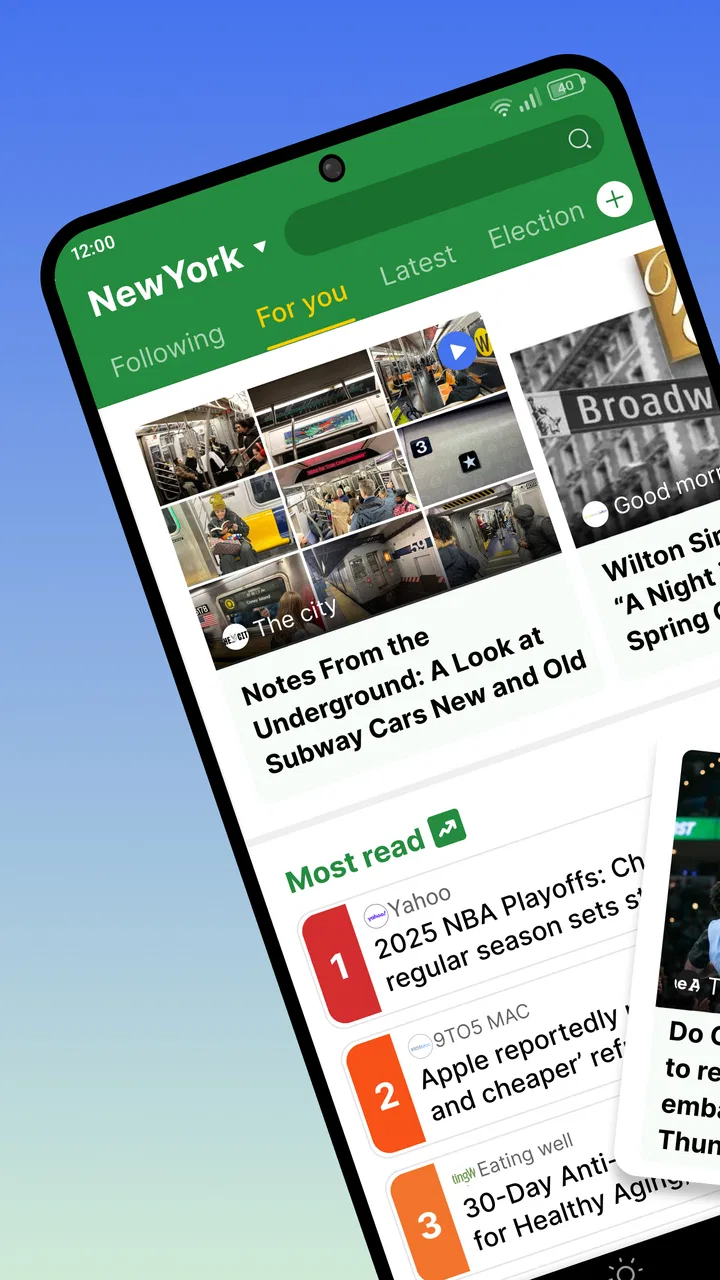
The central appeal is the meeting point between worldwide news and city-level relevance. A global-only reader can tell me about major international developments while leaving me to search separately for what affects my own area. A local-only app has the opposite limitation. This app tries to reduce that switching by putting both perspectives into one place.
I found that especially helpful at the beginning of the day. I could scan broad headlines first, then look for something closer to home before deciding whether a story deserved more attention. That sequence feels natural on a phone because it supports a quick check rather than demanding a long reading session. It is also a sensible way to avoid spending the first few minutes of the morning jumping between browser tabs, social feeds, and local publications.
The important distinction is that I see this as a headline discovery tool first. It helps me identify subjects worth following, but a headline feed should not automatically become my only source for complex stories. When a topic involves public safety, health, elections, travel disruption, or a rapidly changing event, I would still open the underlying coverage and compare reliable sources before making a decision.
Why connectivity changes the experience
The app’s usefulness is tied to the moment when current information can be retrieved. With a stable connection, the idea is simple: open the app, scan what is available, and move from a broad story to a local one. On a weak mobile signal, that same routine becomes less predictable. Headlines may take longer to appear, images or article pages can feel delayed, and a quick check can turn into repeated waiting.
This matters because news is often consumed in places where connectivity is inconsistent: underground stations, crowded venues, elevators, rural roads, or buildings with poor reception. I would not plan around the assumption that the app can replace a saved article or a previously downloaded newspaper. The safer habit is to read important information while it is available and keep another trusted source in mind for moments when the network drops.
That network dependence is not a flaw unique to this app, but it is more noticeable here because the main value is freshness. A static notes app can remain useful without a connection; a news reader loses much of its purpose when it cannot refresh. For me, the best way to use it is as a live check-in tool, not as a guaranteed archive of everything I may want to read later.
Short mobile sessions suit the app best
Global News-Headlines & Alerts fits the small gaps in a day better than long, uninterrupted reading. I can imagine using it while waiting for a meeting, standing in a queue, or taking a short break from work. Those situations reward quick orientation: what is happening in the world, what may be relevant nearby, and which subject deserves deeper attention later.
On a phone, that lightweight rhythm is valuable. I do not always want a dense newspaper layout or a long stream of commentary. Sometimes I only need enough context to decide whether to investigate a story. The app’s broad scope makes that first pass convenient, especially for someone who does not already have a carefully organized collection of news sources.
There is a trade-off, though. Readers who prefer deep analysis, specialist reporting, newsletters, podcasts, or a carefully edited daily briefing may find a general headline service too shallow. The app works best for awareness and discovery. It is less convincing as the sole destination for someone who wants extensive background, author perspective, or a strong editorial voice.
A realistic everyday workflow
My most practical routine would be to check the app twice rather than leave it open constantly. In the morning, I would use it to understand the main global themes and see whether anything local deserves immediate attention. Later, perhaps during a commute or lunch break, I would return to identify changes and open only the stories that affect my plans or interests.
That approach has two advantages. First, it keeps the app from becoming a constant interruption. Second, it makes the connection more manageable because I am deliberately checking when I have reasonable signal instead of expecting perfect loading in every location. If I were traveling, I would use the same method before leaving reliable Wi-Fi: review the current headlines, note important topics, and avoid assuming that every page will remain available during the journey.
A less obvious benefit of this workflow is that it separates awareness from verification. The app can tell me where to look, while a primary source or established publication can help me confirm the details. That is a healthier news habit than treating the first headline I see as a complete account of an event.
What happens when loading fails
Connectivity problems are most frustrating when they happen during a short window of attention. If I have only a minute before boarding a bus, a delayed feed is more damaging than it would be during a relaxed reading session. A practical response is to avoid repeatedly refreshing. I would first check whether other apps can connect, then move to a known source if the information is urgent.
When the network returns, I would reopen the app and reassess the headlines rather than assuming that the first visible set is still current. News changes quickly, and a partial load can create a misleading impression of what is most important. This is one reason I prefer using the app for a broad scan and then reading the full report elsewhere when a subject has real consequences.
The same caution applies to alerts. The app’s name places attention on alerts, but I would not build an emergency plan around a general news application. A local authority, transport operator, workplace system, or dedicated emergency service is a better choice for time-critical instructions. News alerts can be useful prompts; they should not be confused with official warnings.
Managing mobile data without losing the point
Because the app is designed around current news, people using limited mobile data should be intentional. I would avoid leaving it open in the background as a habit and would check it when I actually have time to read. On a metered connection, Wi-Fi is the sensible place for longer browsing, while mobile data is better reserved for a quick headline scan.
Another useful habit is to decide what needs immediate attention before opening every story. Headlines can encourage an endless chain of taps, and each additional page may consume more data than the initial glance. I would start with local items that could affect my day, then move to global topics that genuinely interest me, rather than trying to read everything in sequence.
This selective approach also improves attention. A single feed containing local and international material can become noisy if I treat every item as equally important. Choosing a small number of relevant stories makes the app feel faster and more purposeful, even when the connection is not ideal.
How it compares with familiar alternatives
Compared with opening a search engine and looking for news from scratch, this app offers a more direct starting point. I do not need to remember several publication names just to get an initial overview. Compared with a social network, it can also provide a calmer route into current events because I am not relying on posts, comments, or an algorithmic conversation to decide what deserves attention.
Dedicated newspaper apps remain stronger for readers who already know which publication they trust and want its full reporting, opinion, archives, and subscription features. Aggregators with extensive customization may be better for people who want precise control over subjects, regions, or source selection. Global News-Headlines & Alerts is more appealing when simplicity matters and I want global and city-related awareness in one general-purpose app.
Its connectivity profile is similar to other live news products: the freshest experience requires access to the network, while poor reception can interrupt the most important part of the routine. That means the right comparison is not simply which app has more headlines. It is which service matches the way I consume information. For quick orientation, this app is convenient. For deep trust in one editorial source, a publication-specific app may be better.
Who will appreciate it, and who should skip it
I would recommend it to casual news readers, travelers who want a broad view, people who like checking local developments alongside international events, and anyone trying to replace a scattered collection of browser bookmarks with one simple starting point. It is also suitable for a household where different people want different levels of news without installing several specialized services.
I would be more cautious about recommending it to a reader who needs guaranteed access during travel without connectivity, requires detailed investigative reporting, or expects a highly personalized professional briefing. Someone working in finance, emergency response, law, or healthcare may need specialized sources with clearer authority and more detailed updates. Likewise, a person who dislikes headline-driven browsing may prefer a long-form publication or a curated newsletter.
The app is free, which lowers the barrier to trying it and makes it easy to keep as a secondary news source. Still, free access should not be mistaken for a complete information system. The best results come from combining its convenience with sensible source checking, especially when a headline could influence a serious decision.
Version, accessibility, and the practical setup
The current version is 1.2.1 and it runs on Android 8.0 or later, so it is available to people using a wide range of still-common Android devices. That broad compatibility is useful for families or workplaces where not everyone upgrades phones regularly. Since it is rated for Everyone, it is also positioned as a general-audience news option rather than an app aimed at a narrow age group.
Before relying on it during a trip or a busy day, I would open it once in a place with a good connection and make sure the reading routine feels comfortable on my phone. I would also decide which stories require a second source. That small preparation avoids the common mistake of discovering a connectivity problem only when a developing story becomes urgent.
One practical question many readers have is whether this can replace their existing news apps. In my view, it can replace the first step, not necessarily the whole process. It is a convenient doorway into global and local headlines, while established publications, official websites, and specialist services remain valuable for confirmation and depth.
My connectivity verdict
Global News-Headlines & Alerts succeeds when I treat it as a connected, on-demand overview. Its strongest idea is the pairing of world news with stories closer to my city, and its free, general-audience format makes experimentation easy. I like it most for short checks, deciding what deserves further reading, and keeping a broad sense of the day without maintaining several separate apps.
The main limitation is equally clear: this is not the tool I would trust as an offline reading plan, an emergency notification system, or my only source for complicated events. Weak reception can undermine the quick experience that makes the app attractive, and headline discovery still needs careful follow-up when accuracy and context matter.
For readers with dependable access to the internet who want a simple global-and-local news starting point, I think it is worth trying. My recommendation is to use it deliberately: check it during connected moments, conserve mobile data by choosing stories instead of opening everything, and verify consequential news through authoritative sources. Its best role is a fast first look, not the final word.
FAQs for Global News-Headlines & Alerts
01What features does Global News-Headlines & Alerts offer?
Global News-Headlines & Alerts provides users with real-time updates from trusted news sources worldwide. The app offers customizable alerts, allowing users to select specific topics or regions of interest. It also includes a clean, user-friendly interface with options for saving articles and offline reading.
02Is the app available for both Android and iOS devices?
Yes, Global News-Headlines & Alerts is accessible on both Android and iOS platforms. Users can download it from the Google Play Store for Android devices and the Apple App Store for iOS devices, ensuring a seamless experience across different devices.
03Does Global News-Headlines & Alerts require a subscription?
The app is free to download, offering basic news updates at no cost. However, there is a premium subscription option that provides an ad-free experience, access to exclusive content, and enhanced customization features for a monthly or annual fee.
04How does the app ensure the accuracy of its news content?
Global News-Headlines & Alerts curates content from reputable and verified news outlets around the world. The app employs an editorial team that cross-references articles and uses AI technology to filter out misinformation, ensuring that users receive accurate and reliable news.
05Can users customize their news feed and alerts?
Yes, users have the flexibility to tailor their news feed by selecting preferred topics, sources, and regions. The app allows for personalized notifications, ensuring users receive updates on the areas they are most interested in, providing a more relevant news consumption experience.
Pros
- User-friendly interface for quick navigation.
- Customizable alert settings for real-time updates.
- Wide range of global news sources included.
- Offline reading mode available for convenience.
- Supports multiple languages for diverse users.
Cons
- Occasional ads can disrupt reading experience.
- Limited personalization of news categories.
- Some articles require in-app purchases.
- Notifications can be overwhelming at times.
- Battery drain issues on prolonged use.

Global News-Headlines & Alerts
Gallery